Depending on the type, size or location of the network, it has its own schemes and archtecture.
In this post, I’m gonna share with you what I’ve been learning about this subject in a concise way, because you can find way deeper articles and courses about it somewhere on the internet, here I want to build a more practical and related content between my posts, so I can comeback and find some information that I might forget in th future. So let’s get down to what matters.
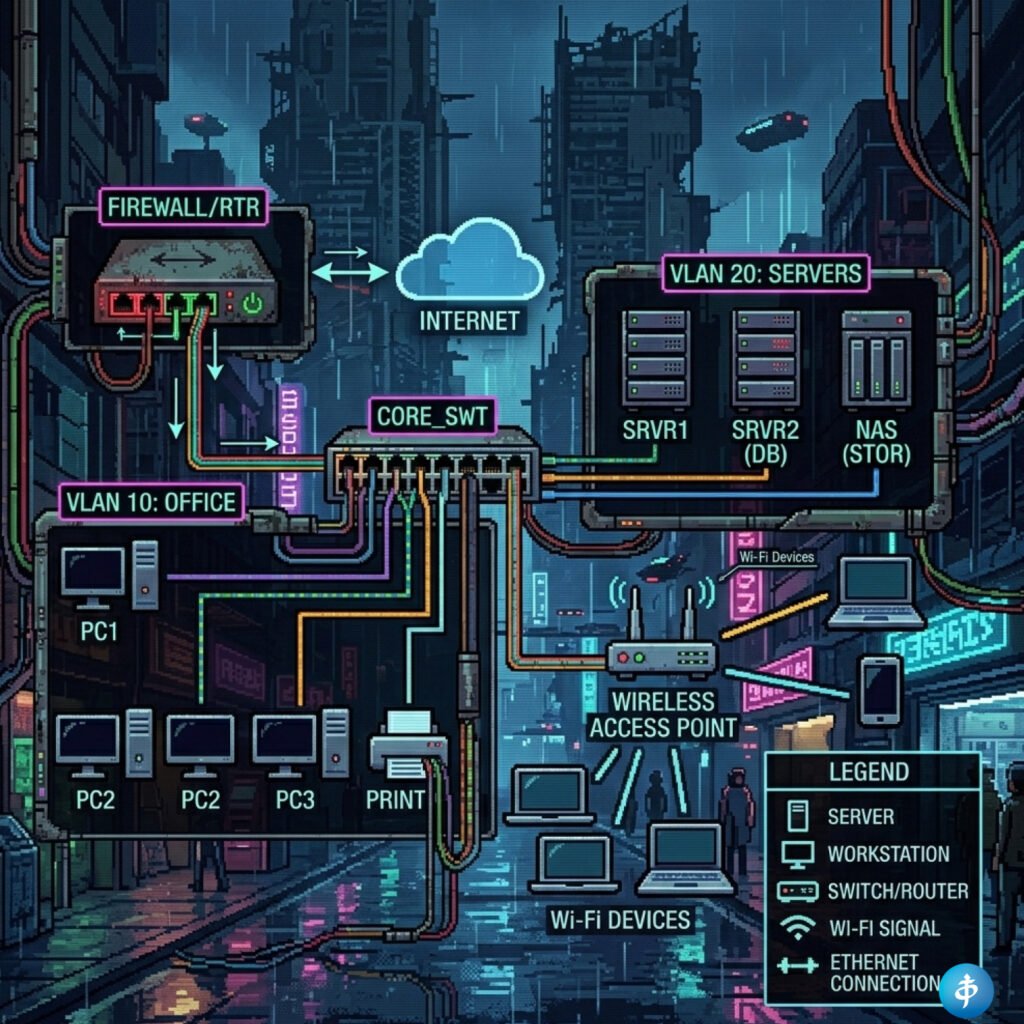
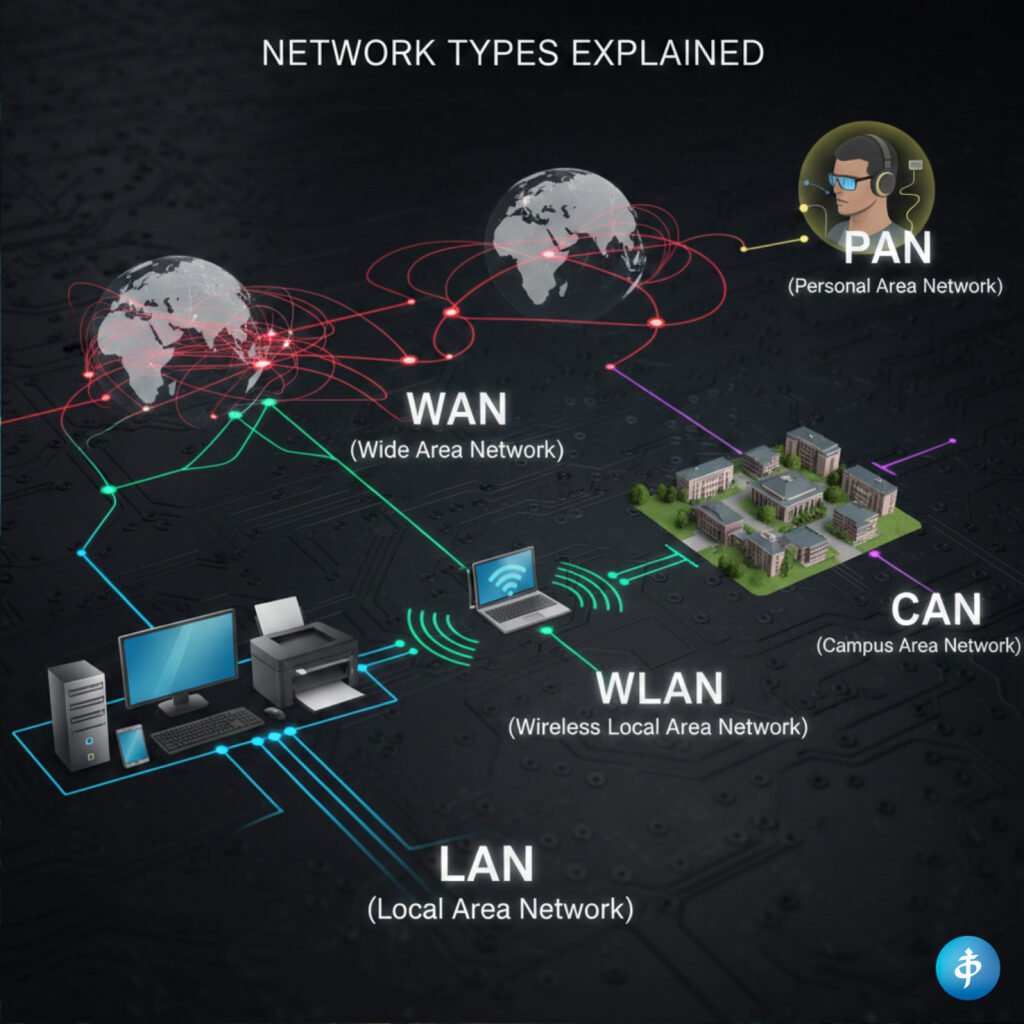
- Local Area Network (LAN): It’s referred to Local network spaces. It can be a house or a building, usually private inside that space with devices connected to one or more routers and switches, if needed, via ethernet cable.
- Wireless Local Area Network (WLAN): As the name says, it’s basically a LAN but with wireless devices connected, I know this is obvious but what is the real difference? Here it comes: The cable connection of the LAN makes it more stable, secure (since you don’t have your data flying around the air) and speed increased due to the direct connection; The wireless connectivity gives you more flexibility, mobility but you might be more exposed in terms of security and you lose a bit of speed (but it’s still fast, don’t worry), with your data being transmitted via Wi-Fi (radio frequencies).
- Wide Ares Network (WAN): That is the largest range from cities to continents (Yeah, that’s huge). So, for this one we have an “older” method called Multiprotocol Label Switching (MPLS), and what heck is that? Yes.. This a method different than IP routing (I’m gonna explain it in another post soon), instead it pre-determined label paths to transmit the data, making it more consistent and reducing the information loss. But, this method requires physical and manual configuration between the sites connected, making it more expensive nowadays and exposed to errors; The SD-WAN, on the other hand, uses a diffrent approach. Its method consists in be defined by software, using public internet and technologies like broadband and 5G, making it cheaper and with a broader band cover. This method allows access from different spaces via cloud. Also, the software decides dynamiclly the best path for the data.
- Control Area Network (CAN): This one is specially designed for vehicles and automation through microcontrollers. It is and needs to be high reliable (we don’t want any troubles while in a high speed vehicle or in an industrial machine/robot. The protocol is based on messages in “nodes” (Data, Remote, Error, and Overload frames) that prioritises the messages to not lose any data and to handle errors through built-in error detection mechanisms.
- Personal Area Network (PAN): Based on small range networks like connecting a Laptop with a mouse or earphones that can be wired or wireless (Wi-Fi, Bluetooth or USB).
Main Differences in Summary
That’s it for today, I’m planning to write something about IP or OSI model next time. If by the time you are reading it, the words might be turned into links to other posts. I hope it may help you somehow. Thanks.